
New AWRI Report from Wine & Viticulture Journal on Microbiological stability of wine packaging in Australia and New Zealand. Read it here now.
The Australian Wine Research Institute Blog
Cheers to 60 years supporting Australian wine
26 April 2015 >The AWRI today celebrates its 60th birthday – 60 years of world class research and technical support for Australia’s wine industry.
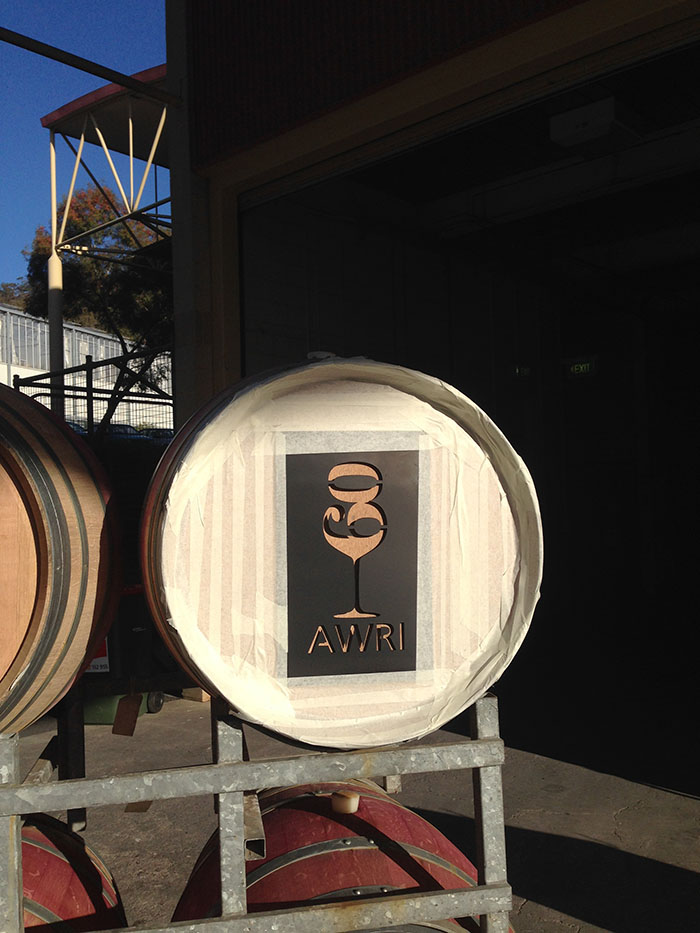
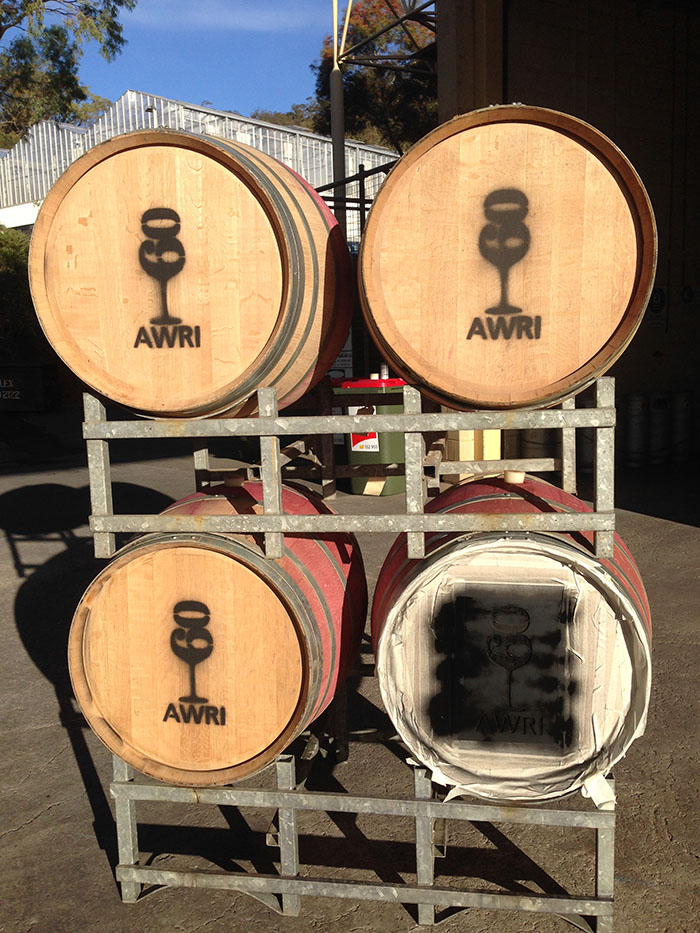
A stencil and some paint
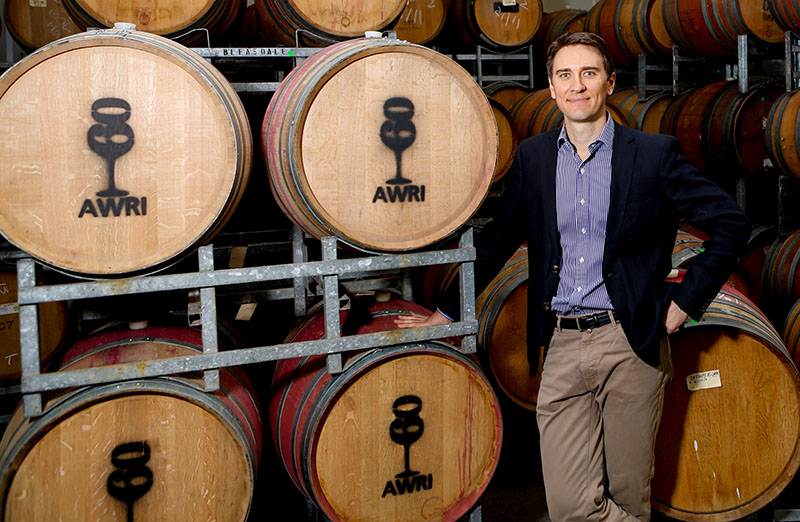
22 April 2015 >In such a busy winery, with so many students, researchers and other winemaking groups doing their own thing, it is certainly in your own interest to make sure that your barrels are clearly labelled. We also have what we think is a really good logo to mark our 60th birthday, so we decided to use it to avoid any doubt of what was in our barrels!
Into the barrels
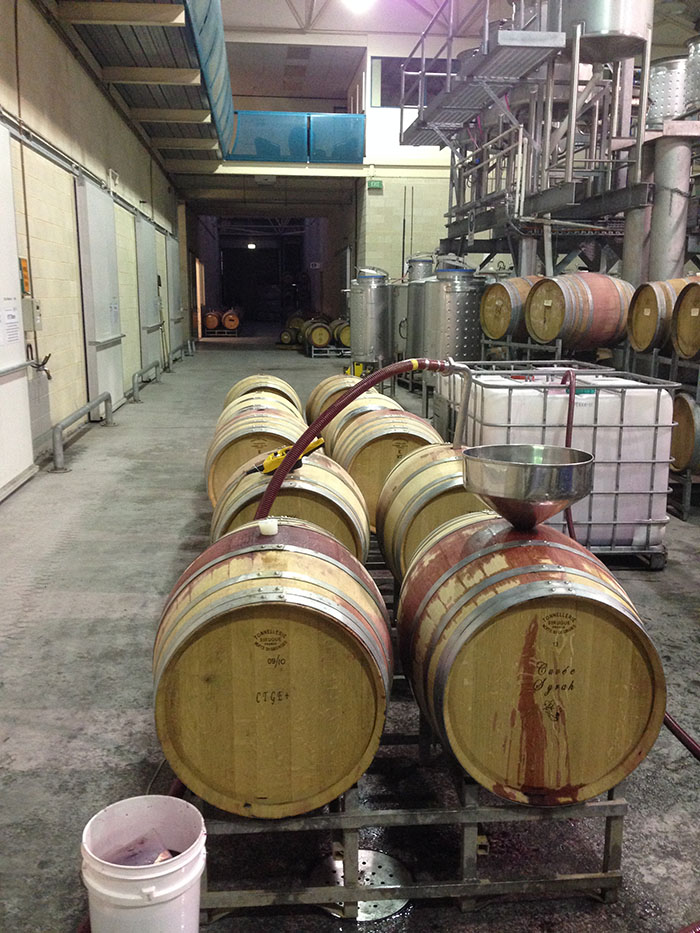
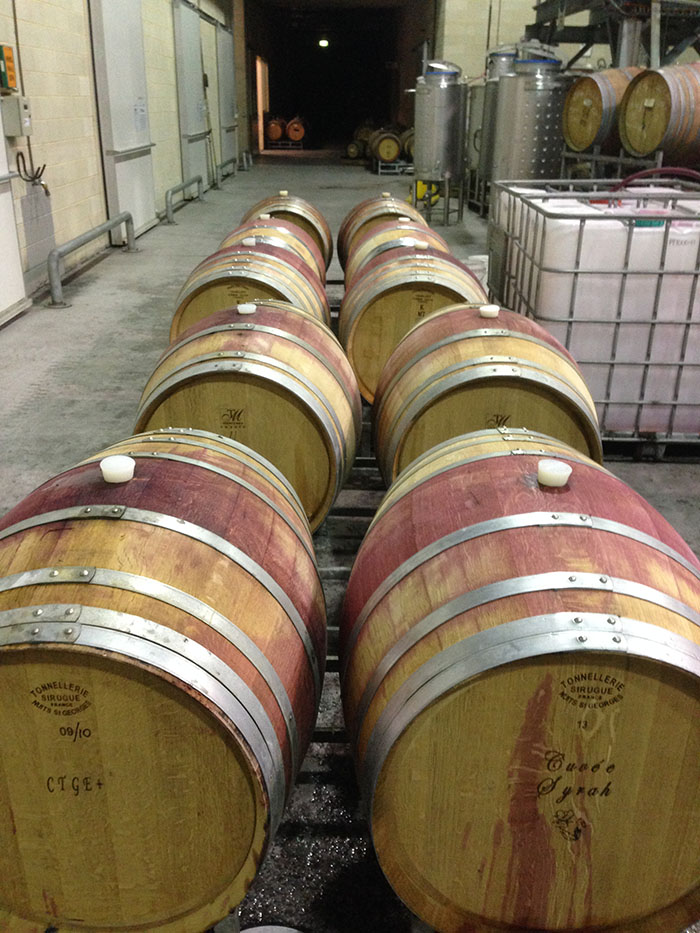
12 April 2015 >By early evening it was finally time to put the wine into barrels. Working with barrels is a very satisfying thing for this winemaker.
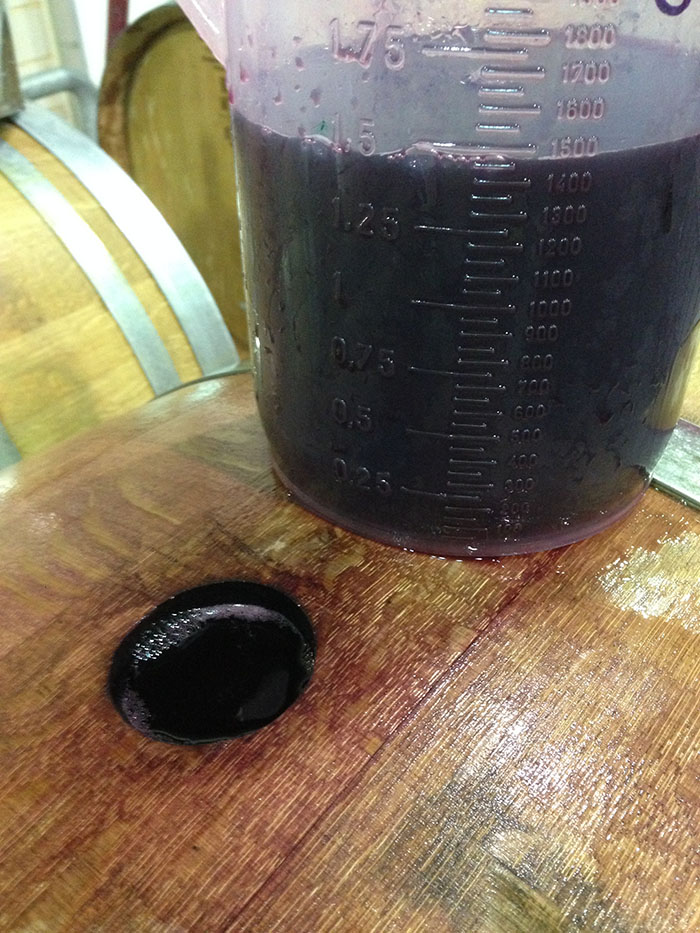
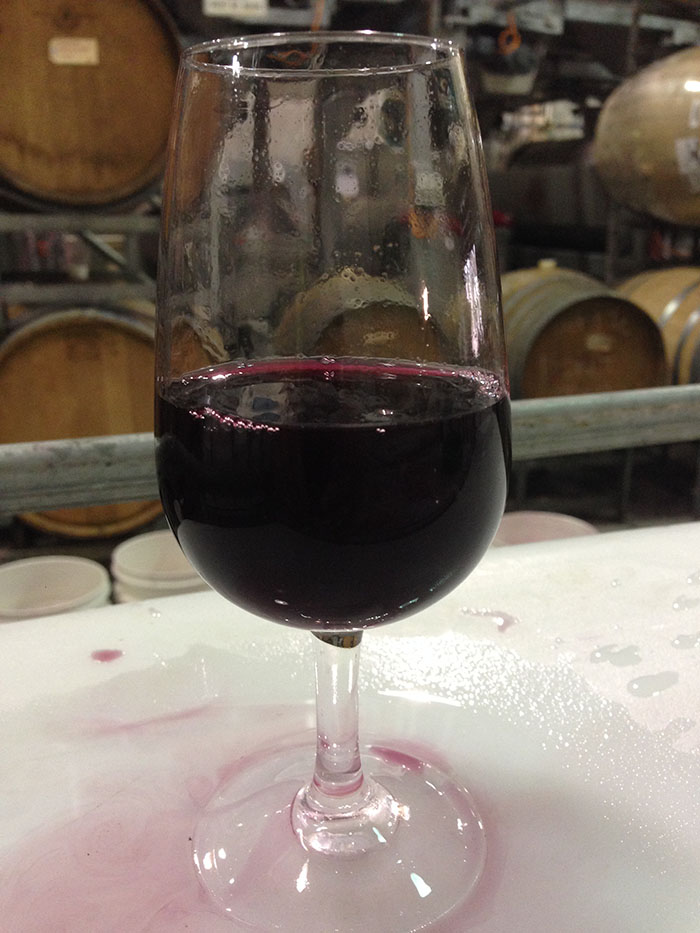
The wine had retained great colour after additions of 65 ppm of SO2 and some tartaric acid.
And while filling the barrels, we were pleased to be visited by Caroline Winter of the ABC Country Hour program, who had come across this blog on the internet. Her program about the wine should air shortly.
Ten barrels safely put to bed.
Time to blend
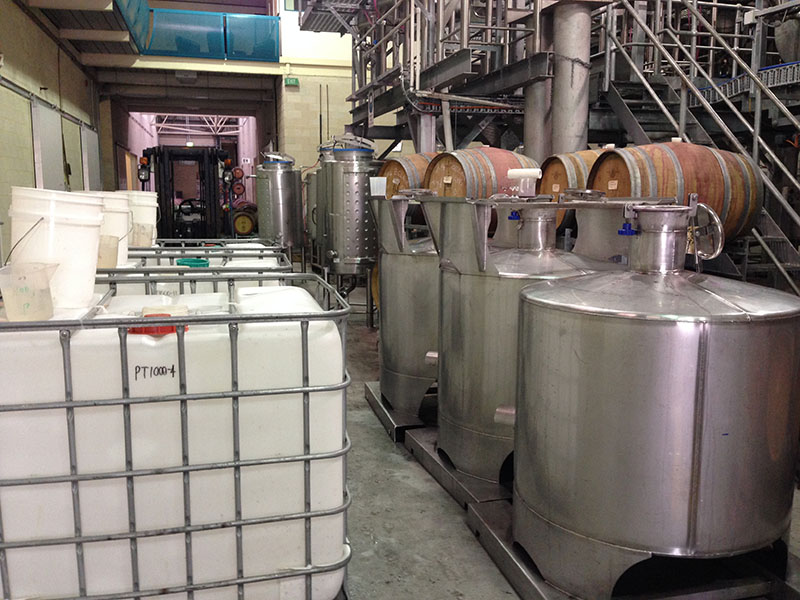
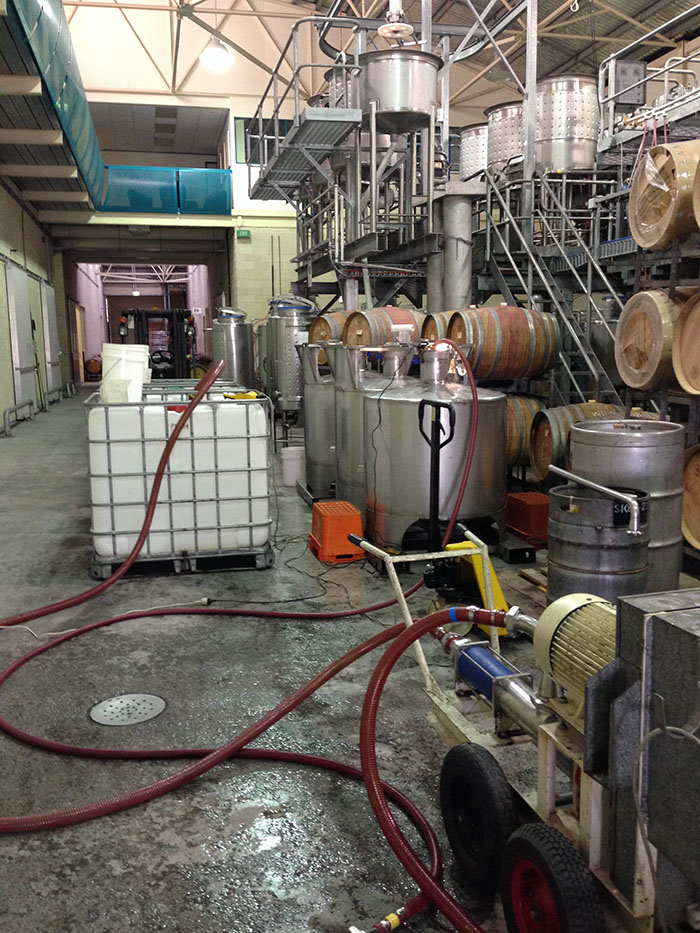
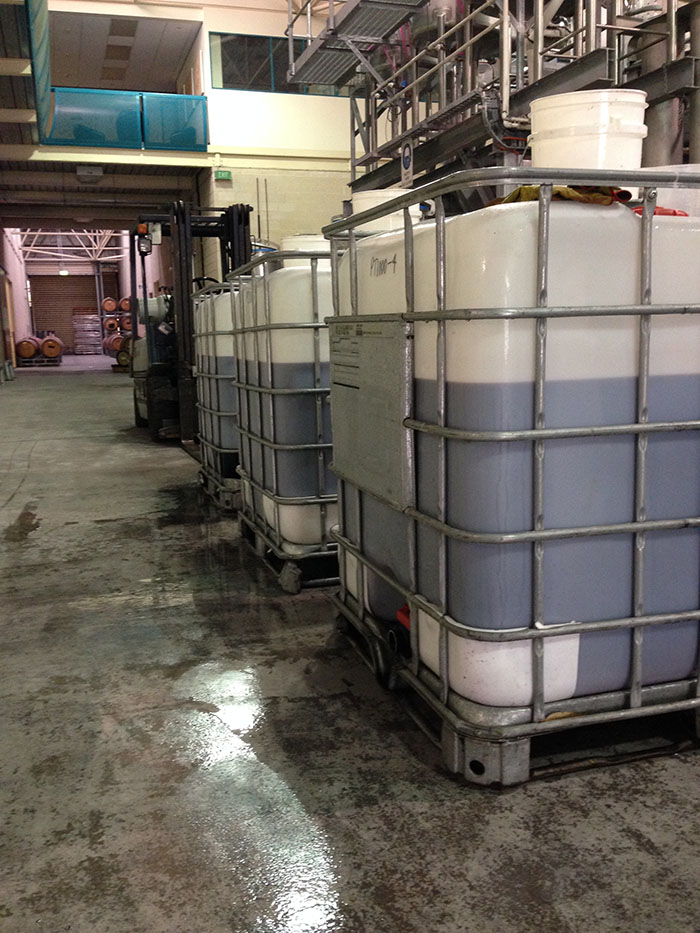
>Because there was no tank available which was large enough to blend all of our wine, the three tanks and two smaller containers had to be accurately blended by other means, before being put into barrel.
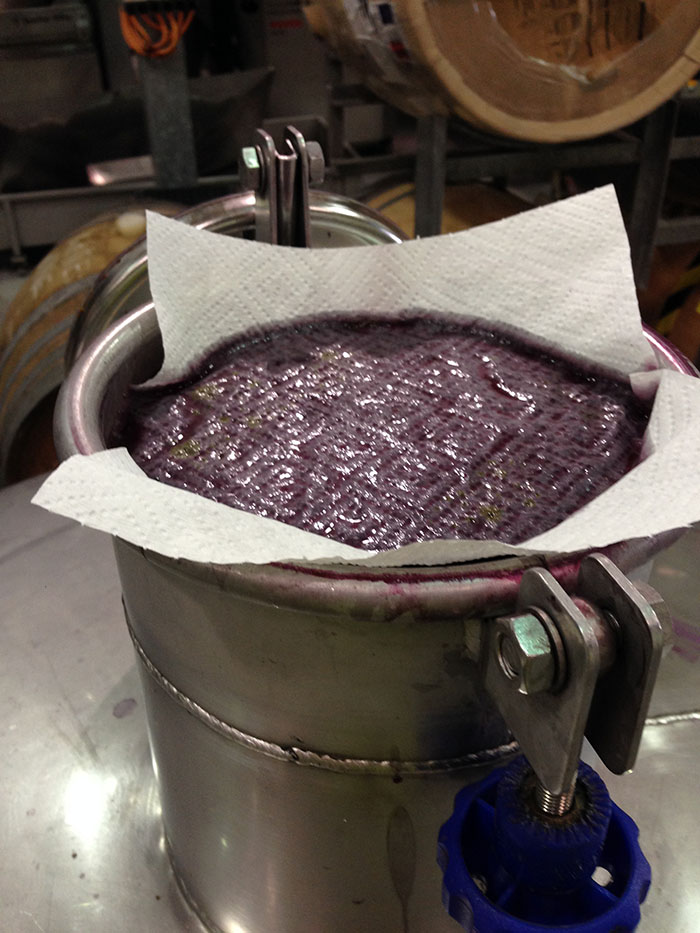
Here’s something we haven’t seen very often – grape seed oil on top of the wine.
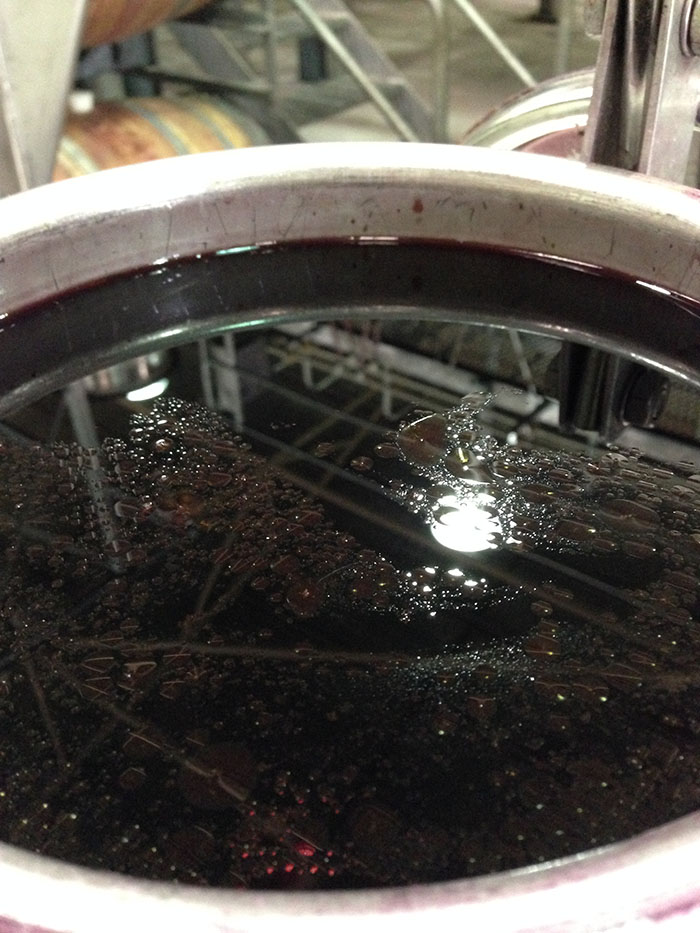
After the initial horror, before it was realised what it was, it is easily removed with a piece of kitchen towel.
The wine had settled well and racked very cleanly.
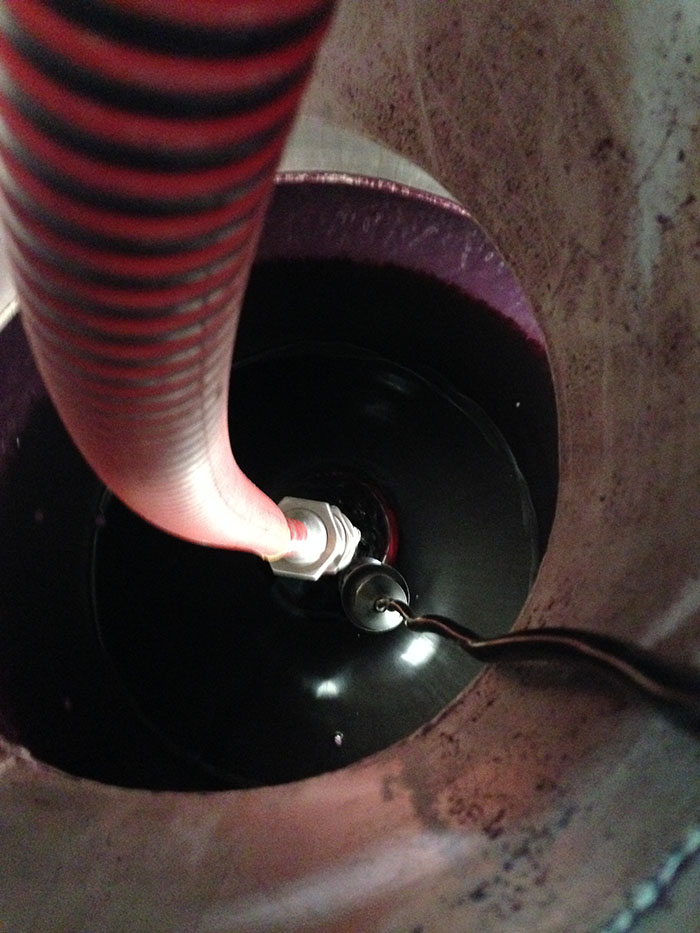
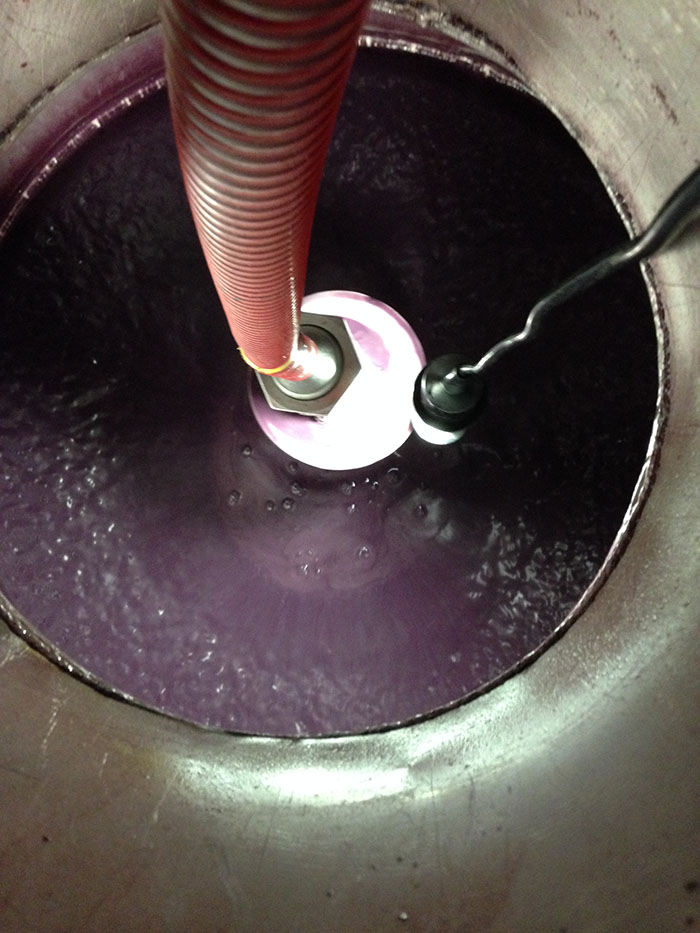
And the lees were very thick and gluggy.
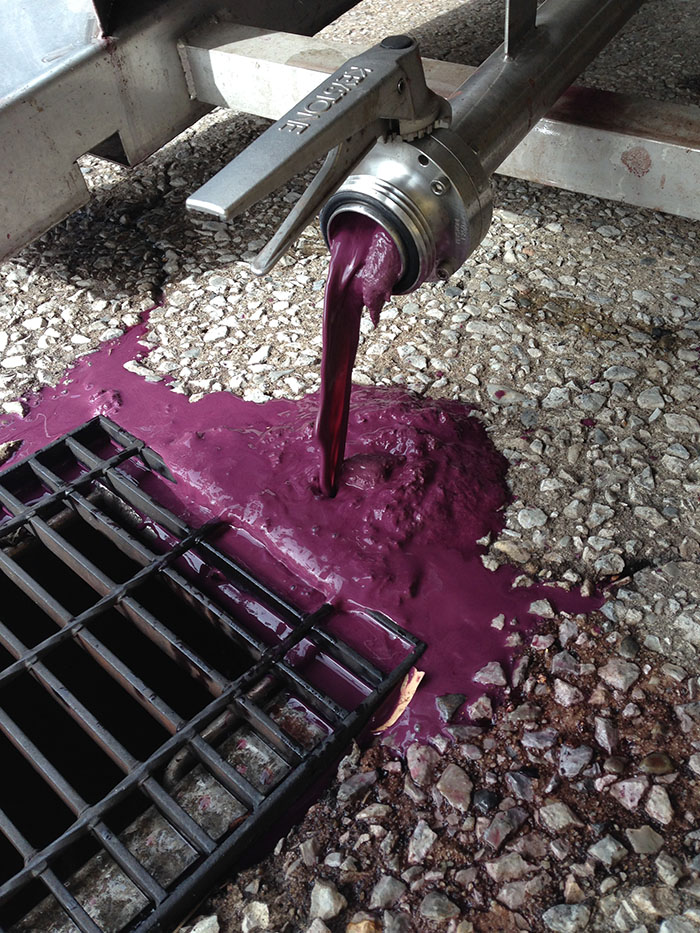
So we had an accurate blend for the first time, and geez – we reckon the wine is looking pretty good.
Barrel preparation
11 April 2015 >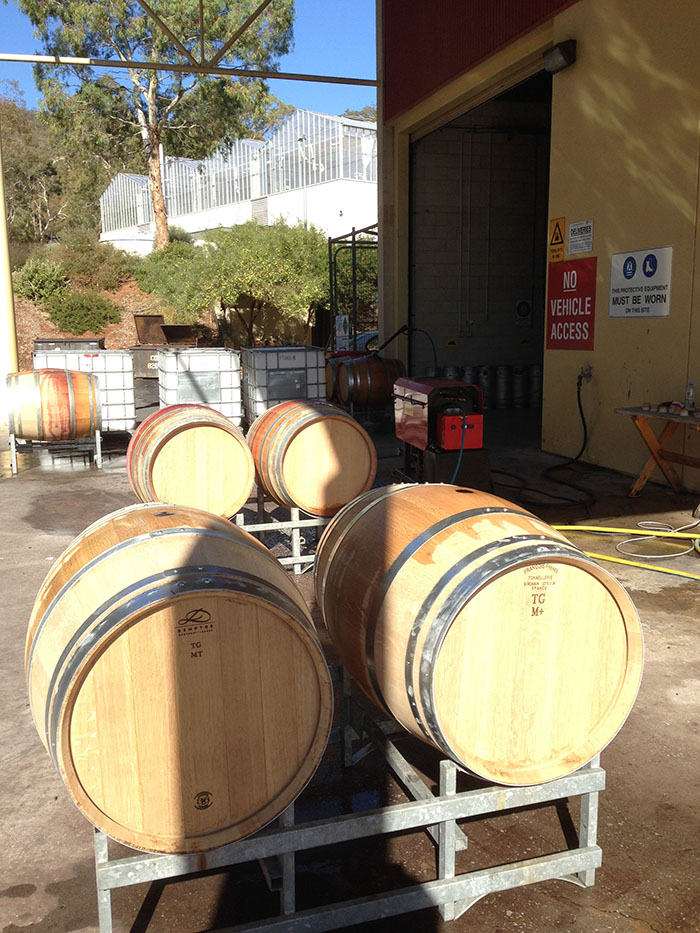
It was time to get the wine into oak, with the malo having been completed very efficiently in tank. But the barrels were given a heat treatment first.
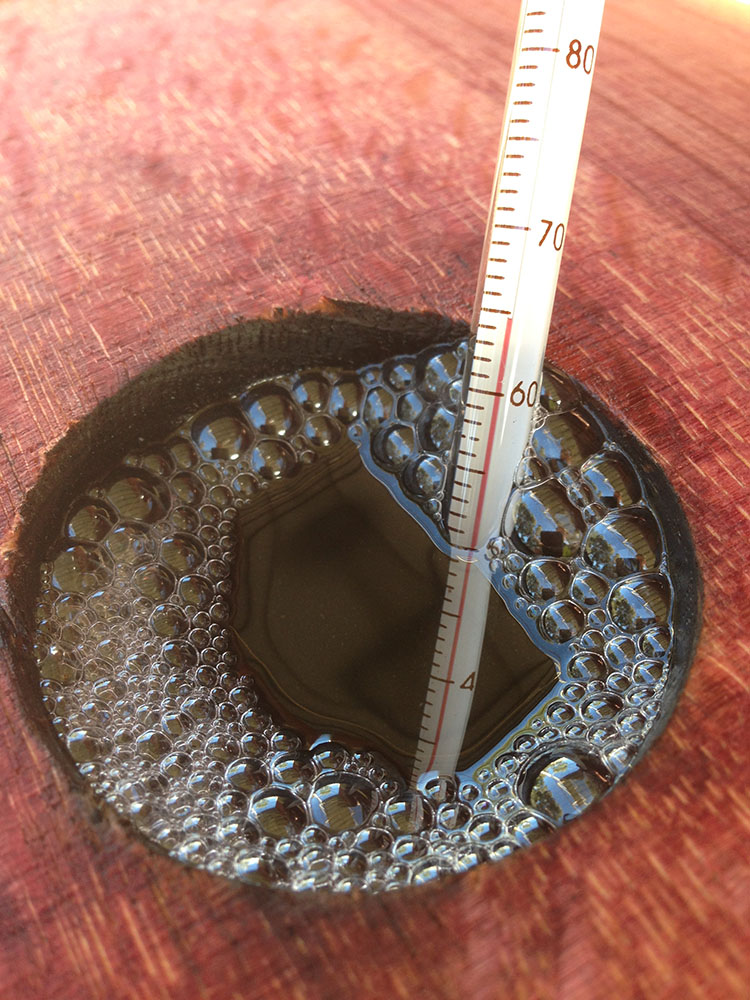
They were filled with water, which was then brought up to temperature by blowing hot water/steam from a pressure cleaner through it.
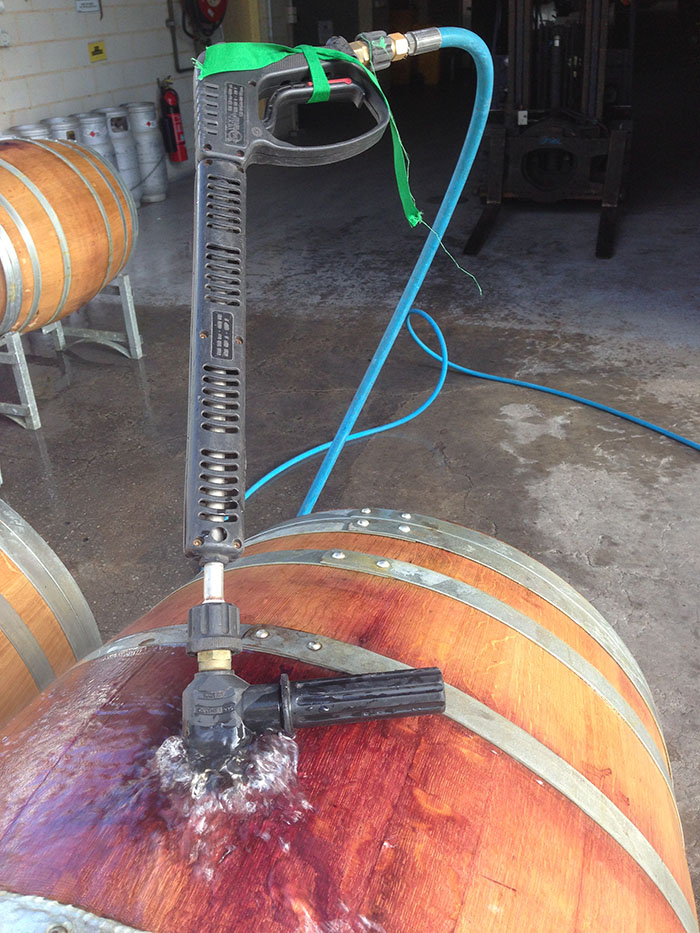
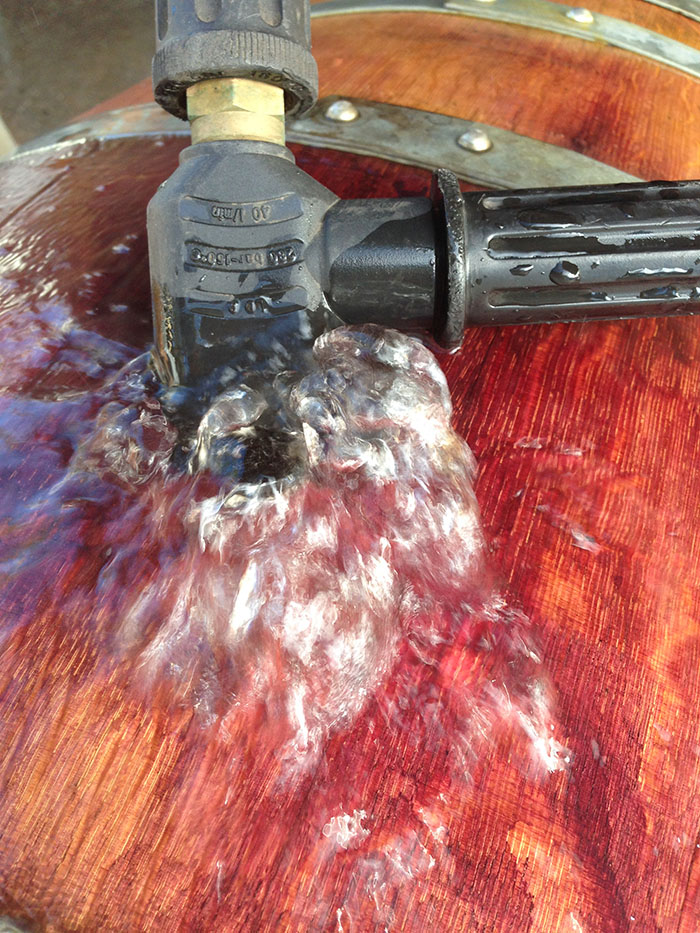
This raised the temperature to almost 65 degrees quite rapidly, and it was then left overnight; long enough for the radiated heat to kill any pesky Bretts or other life lurking in the wood.
Technical Review April 2015 issue now available online
8 April 2015 >The April 2015 issue of Technical Review is now available online. Articles and abstracts can be viewed individually, or the full issue can be downloaded. For copyright reasons, access is available only to Australian winemakers and grapegrowers who pay the Wine Grapes or Grape Research levies. The new online Technical Review allows you to browse the list of the latest articles on grape and wine production by keyword, view article summaries and order journal articles from the AWRI Library.
Below is a snapshot of what’s in this issue:
| AWRI Technical Notes | |
| AWRI publications |
|
| Current literature – oenology |
|
| Current literature – viticulture |
|
Queensland winemaker tops the tasting class
30 March 2015 >The AWRI announced today that Jessica Ferguson, Assistant Winemaker at Sirromet Wines, had been name the dux of the 35th Advanced Wine Assessment Course (AWAC).
Unveiling McLaren Vale’s VALO
27 March 2015 >VALO, a highly innovative new event centred on McLaren Vale wine, will be revealed at an exclusive launch event at 2KW Bar and Restaurant in Adelaide on Wednesday 1 April.
Oak choices
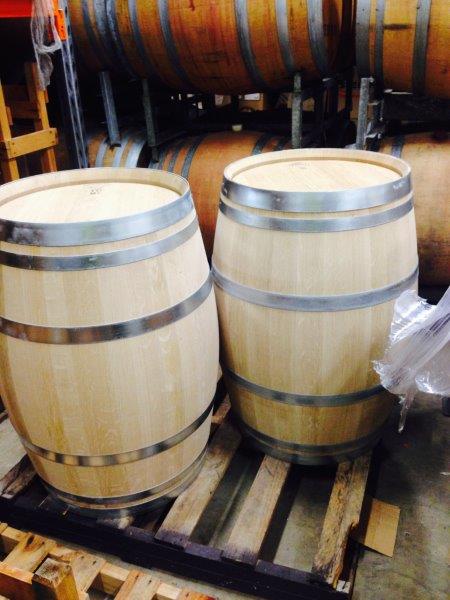
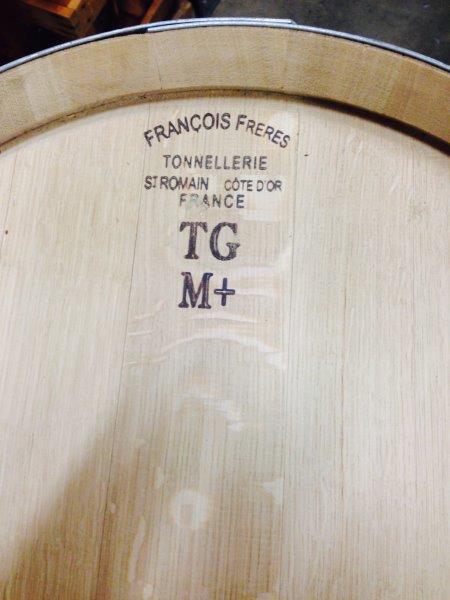
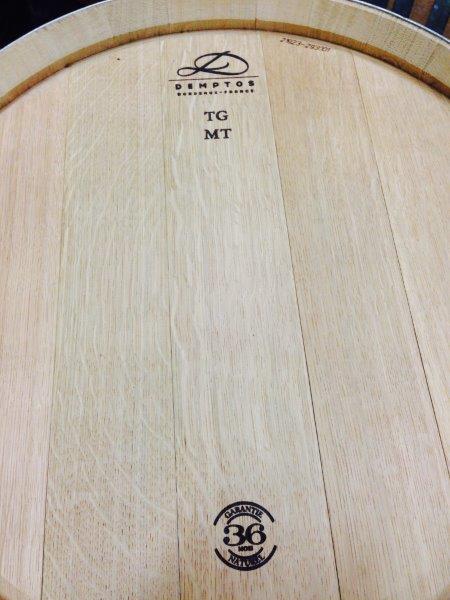
23 March 2015 >It’s easy to over-oak or inappropriately oak a wine – and we only have one chance with this wine. However, while it’s true that once the oak is in the wine you can’t take it out, by being too cautious we also risk a mediocre result. So we want to acknowledge the people who have shared their knowledge to help us make informed decisions about this super-important part of the AWRI’s 60th Birthday Barossa Shiraz.
We were very lucky to be able to purchase some really high quality second-hand oak from the guys at Kaesler – thanks to Bos and Dewy for making it happen. The barrel tasting we did with Bos last spring of their 2013 and 2014 wines was insightful with regard to the characteristics of the Barossa sub-regions and of different coopers, types of oak and barrel age. It also highlighted the importance of picking date and the shortness of the picking window (certainly a major factor in 2015!!).They were also lovely wines – wine after wine after wine!!
The delivery of the second-hand barrels.
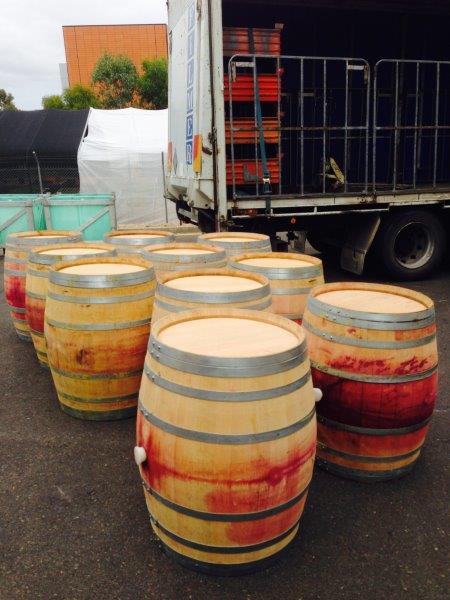
This isn’t your average ‘second hand’ oak!!
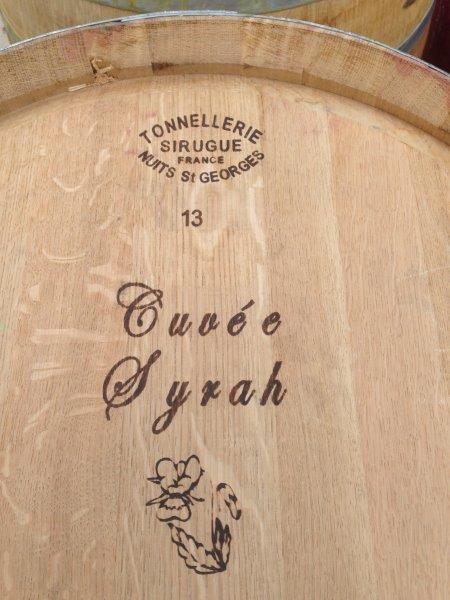
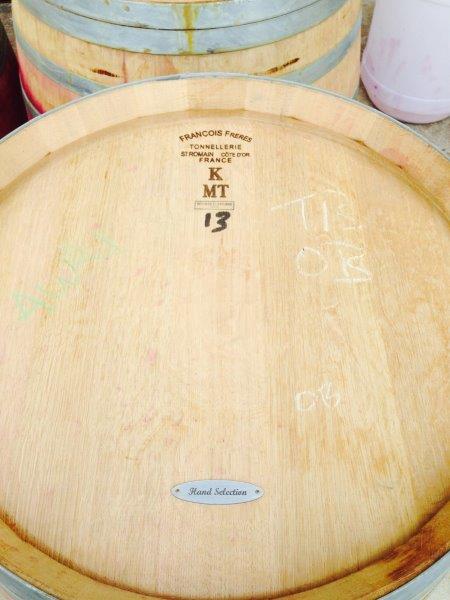
The barrels ex Kaesler cleaned and ready to go.
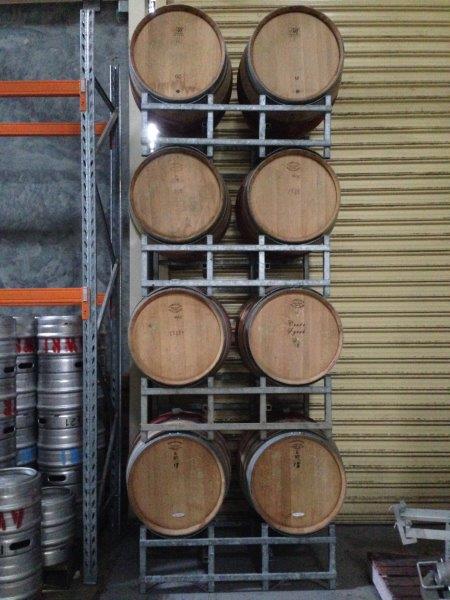
Steve Frost and his crew at Wolf Blass also went to great trouble to prepare multiple barrel samples by sub-region, which allowed us to really pin down the coopers, seasoning, and toasting regimes we were looking for. I’ve never met anyone with as much knowledge of the coopers and oak as Frosty; or at least, I’ve never met anyone who is so willing and able to express such a vast knowledge and experience in such a free and easily explained way. Seeing how he uses oak as a creative tool to maximise the expression of the fruit from the sub-regions was a great experience – thanks for sharing your knowledge so freely. As a result, it was easy to settle on how to spend our budget for two new barrels: